
German Stata Conference 2025
Bericht zu German Stata Conference 2025
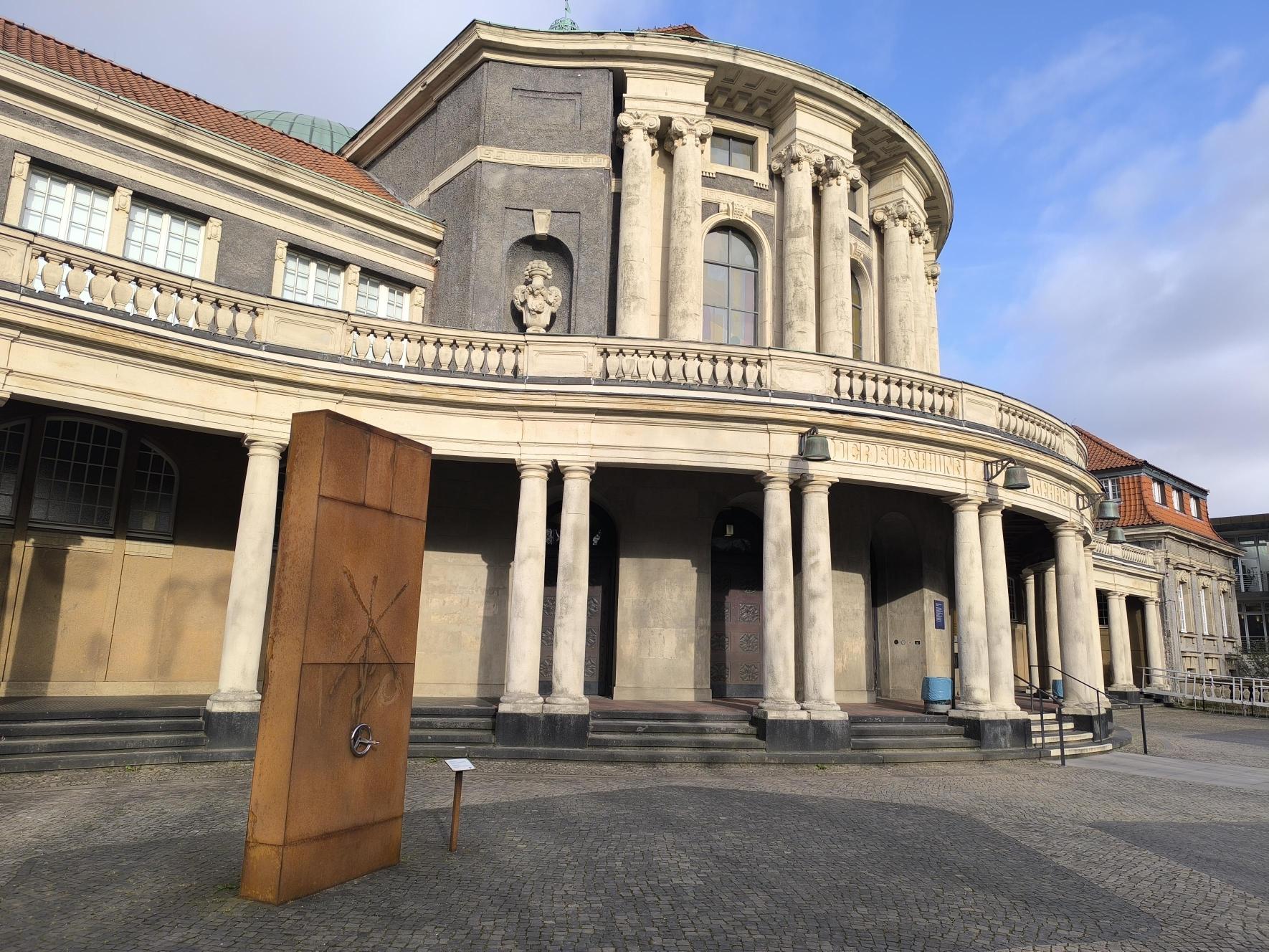
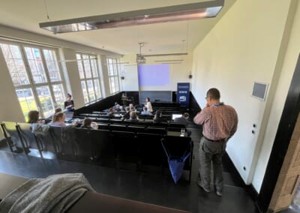
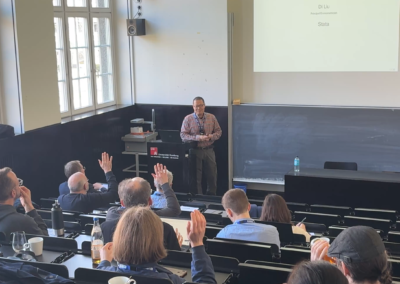
Am 27. und 28. März 2025 veranstaltete die DPC Software GmbH die 22. German Stata Conference an der Universität Hamburg. Die Konferenz bot allen, die sich für Stata, statistische Methoden und datenbasierte Forschung begeistern, eine inspirierende Plattform. Teilnehmende aus Wissenschaft, Wirtschaft und öffentlichen Einrichtungen kamen zusammen, um Ideen auszutauschen, voneinander zu lernen und neue Entwicklungen in der Datenanalyse kennenzulernen.
Workshop: Schreiben, Analysieren und Präsentieren – nahtlos miteinander verbunden
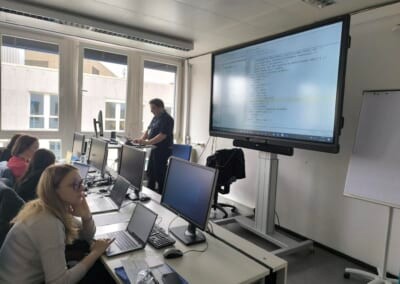
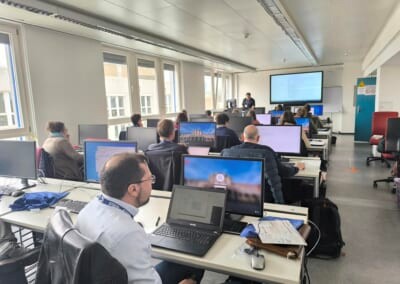
Die Konferenz begann mit einem ganztägigen Workshop unter dem Titel „Interaction between Text Writing and Statistical Analysis: Result Export and Dynamic Documents with Stata“. Geleitet wurde er von Dr. Christian Brzinsky-Fay von der Universität Hamburg. Mehr als 20 Teilnehmende vertieften sich in die Erstellung dynamischer Dokumente mit Stata.
Im Mittelpunkt stand die Integration von statistischen Analysen, Texterstellung und Ergebnisdokumentation in einen durchgängigen Arbeitsablauf. Dieses Thema ist sowohl für die wissenschaftliche Forschung als auch für praktische Anwendungen von großer Bedeutung. Der Workshop bot eine produktive Lernumgebung, lebhafte Diskussionen und zahlreiche praktische Aha-Momente, von denen die Teilnehmenden sicherlich auch bei ihrer zukünftigen Arbeit profitieren werden.
Konferenztag: Inspirierende Einblicke in die Zukunft der Datenanalyse
Am zweiten Tag öffnete sich die Konferenz einem breiteren Publikum und bot ein vielfältiges Programm mit spannenden Vorträgen aus Wissenschaft und Praxis. Ein besonderes Highlight war die Keynote von Prof. Dr. Frauke Kreuter, einer renommierten Expertin für Statistik und Data Science. Ihr Vortrag trug den Titel „Co-Creating with AI: The Role of LLMs as Intelligent Data Science Agents“.
Prof. Kreuter beleuchtete die wachsende Bedeutung großer Sprachmodelle (Large Language Models, LLMs) in der datenbasierten Forschung und zeigte auf, wie KI zunehmend als Mitautorin und Analysepartnerin eingesetzt werden kann. Ihr Vortrag fand großen Anklang beim Publikum und regte lebhafte Diskussionen über die sich wandelnde Zusammenarbeit zwischen Menschen, Maschinen und Methoden an.
Neben der Keynote bereicherten zahlreiche weitere Beiträge das Konferenzprogramm. Sie deckten ein breites Themenspektrum ab, von methodischen Innovationen bis hin zu praktischen Tipps für die Arbeit mit Stata. Diese Vielfalt machte die Konferenz zu einer abwechslungsreichen und anregenden Veranstaltung.
Die 22. German Stata Conference 2025 war ein großer Erfolg. Sie zeichnete sich durch fachliche Tiefe, einen lebendigen Austausch und den starken Gemeinschaftssinn aus, der die Stata-Community prägt. Unser besonderer Dank gilt der Universität Hamburg für die hervorragende Organisation und die herzliche Gastfreundschaft. Wir freuen uns bereits auf die Konferenz im nächsten Jahr!

Professor Frauke Kreuter
Professor Frauke Kreuter is the Professor of Statistics and Data Science in Social Sciences and the Humanities at the Ludwig-Maximilians-University of Munich, Germany; Co-director of the Social Data Science Center (SoDa), and a faculty member in the Joint Program in Survey Methodology (JPSM) at the University of Maryland, USA.
Di Liu
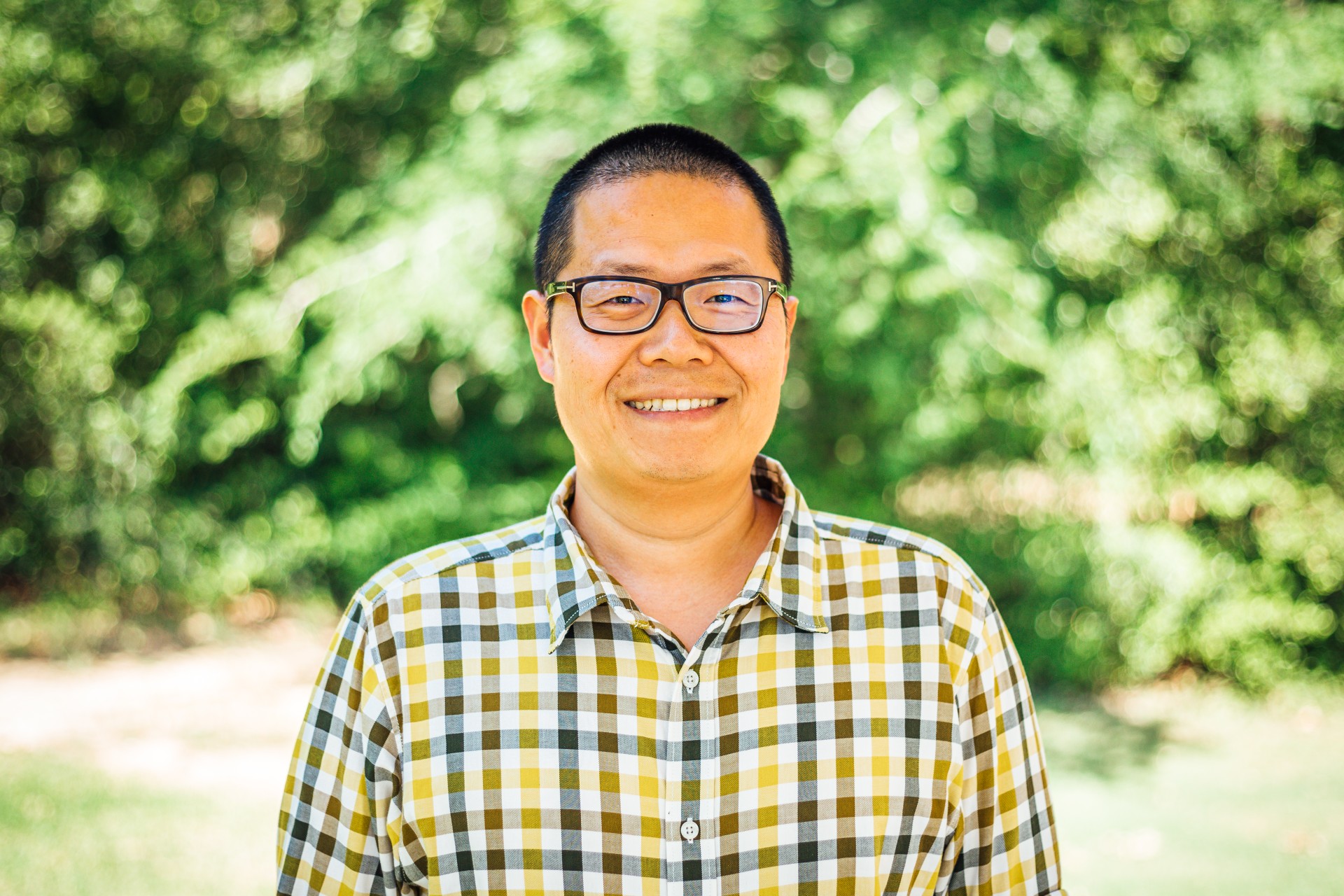
Di Liu ist Principal Econometrician im Team für ökonometrische Entwicklung bei StataCorp LLC. Er ist maßgeblich an der Entwicklung verschiedener Stata-Funktionen beteiligt, darunter Verfahren für Difference-in-Differences-Schätzungen mit heterogenen Effekten, instrumentelle Quantilsregression, die Schätzung von Behandlungseffekten mit Lasso, Lasso für Prognosen und statistische Inferenz, räumliche autoregressive Modelle sowie die Befehle heckpoisson und betareg.
Darüber hinaus hat er wissenschaftliche Artikel im Canadian Journal of Economics, in Econometric Reviews, Empirical Economics, Econometrics and Statistics und im Stata Journal veröffentlicht.
Di Liu promovierte in Wirtschaftswissenschaften an der Concordia University in Montreal, Kanada. Außerdem besitzt er einen Ingenieurabschluss in Software Engineering und Statistik von der Polytech’Lille in Lille, Frankreich, sowie Bachelor- und Masterabschlüsse in Informatik von der Hohai University in Nanjing, China.
Der Workshop behandelt den Austausch von Ergebnissen zwischen Stata und Textverarbeitungsprogrammen.
Im ersten Teil werden verschiedene Möglichkeiten vorgestellt, Tabellen in Stata individuell anzupassen und nach MS Word zu exportieren. Die Teilnehmenden lernen, wie sich einzelne Tabellen mit den Stata-Befehlen dtable und etable erstellen lassen. Anschließend folgt eine Einführung in die erweiterten Funktionen der Collect-Befehlssuite, die seit Stata 17 verfügbar ist.
Im zweiten Teil geht es um die Erstellung dynamischer beziehungsweise automatisierter Dokumente. Diese enthalten spezielle Befehle (Tags), mit denen aktuelle Ergebnisse wie Grafiken und Tabellen direkt in Textdokumente eingebunden werden können. Dadurch entfällt das wiederholte und oft mühsame Kopieren und Einfügen zwischen Stata und MS Word.
Mit dem Befehl dyndoc lassen sich HTML- oder DOCX-Dateien erstellen. Darüber hinaus wird erläutert, wie sich Word- und Excel-Dateien mithilfe von putdocx und putexcel individuell gestalten lassen.
Referent

Dr. Christian Brzinsky-Fay
Dr. Christian Brzinsky-Fay ist seit März 2022 bei DPC Software tätig und engagiert sich mit großer Leidenschaft für die Durchführung von Stata-Schulungen. Sein Weltbild wurde maßgeblich von Monty Python geprägt.
Er studierte Politikwissenschaft an der Freien Universität Berlin und promovierte im Bereich Sozialpolitik an der Universität Tampere in Finnland. Als quantitativer Sozialforscher nutzt er Stata seit 25 Jahren für statistische Analysen. Darüber hinaus lehrt er Statistik und empirische Methoden der Sozialforschung an der Universität Hamburg.
Vorträge
Frauke Kreuter (LMU München)
Abstract: As AI advances, large language models (LLMs) are shifting from passive tools to active agents that collaborate with experts to co-create knowledge and artifacts. In this talk, we explore the role of LLMs as intelligent agents in data science workflows – partners that not only automate tasks but also enhance decision-making by understanding core data science principles, identifying cognitive biases, and nudging experts toward more robust conclusions.
We discuss how an LLM, equipped with statistical reasoning, ethical AI considerations, and an awareness of human cognitive pitfalls, can challenge assumptions, suggest alternative methodologies, and improve model interpretability. From guiding feature selection to questioning spurious correlations, these AI agents act as reflective collaborators rather than mere calculators.
We will examine case studies where LLMs have meaningfully influenced analytical processes, highlight challenges in aligning AI nudges with human intent, and explore the future of AI-augmented data science, generally and while using Stata.
This talk is primarily conceptual and designed to inspire but also to rethink our relationship with AI – not as a tool, but as a co-creator in the pursuit of knowledge.
Daniel Krähmer (LMU Munich, Department for Sociology)
Abstract: Multiverse analysis is becoming an important tool in the methodological repertoire of social scientists. The idea behind the method—variously referred to as “multiverse analysis,” “multimodel analysis,” “speciAfcation curve analysis,” or “vibration of efects”—is straightforward: since there are many credi- ble ways of formulating an analysis, and any single statistical estimate may sufer from selective reporting, multiverse analysis explores all reasonable speciAfcations, contrasting authors’ preferred estimate with a range of possible estimates. Instead of luring readers into a dark corner of the “garden of forking paths,” multiverse analysis provides a bird’s-eye view of the maze of researcher decisions and the resulting range of defensible findings. While multiverse analysis holds significant promise for quantitative empirical research, it poses conceptual, computational, and practical challenges. This talk provides a primer on implementing multiverse analysis in Stata. It highlights the strengths and limitations of existing multi- verse tools (e.g., mrobust, multivrs) and introduces a new plot type designed to visualize multiverse results effectively. By addressing key challenges in conducting and visualizing multiverse results, the talk seeks to encourage Stata users to adopt multiverse analysis and unlock its potential for robust and transparent research.
Daniel Klein (DZHW) and Felix Bittman (LIFBI)
Abstract: Researchers often want to mitigate the increased risk of type I errors that arises from multiple pairwise comparisons of means. Stata provides seven methods to adjust the corresponding confidence intervals and p-values. However, four of these methods assume equal sample sizes, variances, or both, and none explicitly addresses unequal variances, which might pose limitations on applied research. In this presentation, we briefly review how the implemented methods modify the significance level or obtain critical values from alternative distributions to adjust for multiple comparisons. We then discuss three methods that explicitly account for unequal variances by making additional adjustments to standard errors and degrees of freedom. Finally, we (re-)introduce the pwmc command in Stata, which implements these three methods, and compare their performance using a Monte Carlo simulation.
Ulrich Kohler (University of Potsdam, Faculty for Economic and Social Sciences)
Abstract: This talk presents an egen-function to convert units of measurements for length, areas, volumes, angles, masses, temperatures and currency. The function allows both, to convert many non-SI units (e.g., inch, furlong, sunradius) to SI-units (from pico to peta) or directly from a non-SI unit to another non-SI unit. Currencies are converted by calling the European Central Bank through an API. The conversion rate can be selected on a daily base or by an average of a specified period. German users may be relieved to realize that the function allows converting areas also into units of “Saarland”.
Di Liu (StataCorp)
Abstract: Stata 18 introduced two commands (each with four estimators) to fit heterogeneous DID models: hdidregress for repeated cross-sectional data and xthdidregress for panel/longitudinal data. In this talk, we briefly introduce the theory behind both estimators and then show how to fit heterogeneous DID models using the new commands. We also demonstrate postestimation tools to aggregate and visualize heterogeneous treatment effects and perform diagnostic tests.
Raoul Dittrich (DPC Software GmbH)
Abstract: The Stata license model is gradually changing from perpetual licenses to a pay-as-you-go model called StataNow. Whilst this gives researchers and users of Stata the advantage of always having access to the latest features of the software, the pay-as-you-go model requires different planning and budgeting for software. Many different options to license Stata exist, depending on edition, usage, organisation, and many other factors. This talk makes suggestions for finding a license option that meets the functional requirements, including multi-year models and covering of EUR/USD fluctuations.
Ben Jann (University of Bern)
Abstract: In 2008, I published the Stata command -oaxaca-, which implements the popular Oaxaca-Blinder (OB) decomposition technique. This technique is used to analyze differences in outcomes between groups, such as the wage gap by gender or race. Over the years, both the functionality of Stata and the literature on decomposition methods have evolved, so that an update of the -oaxaca- command is now long overdue. In this talk I will present a revised version of -oaxaca- that uses modern Stata features such as factor-variable notation and supports additional decomposition variants that have been proposed in the literature (e.g., reweighted decompositions or decompositions based on recentered infuence functions).